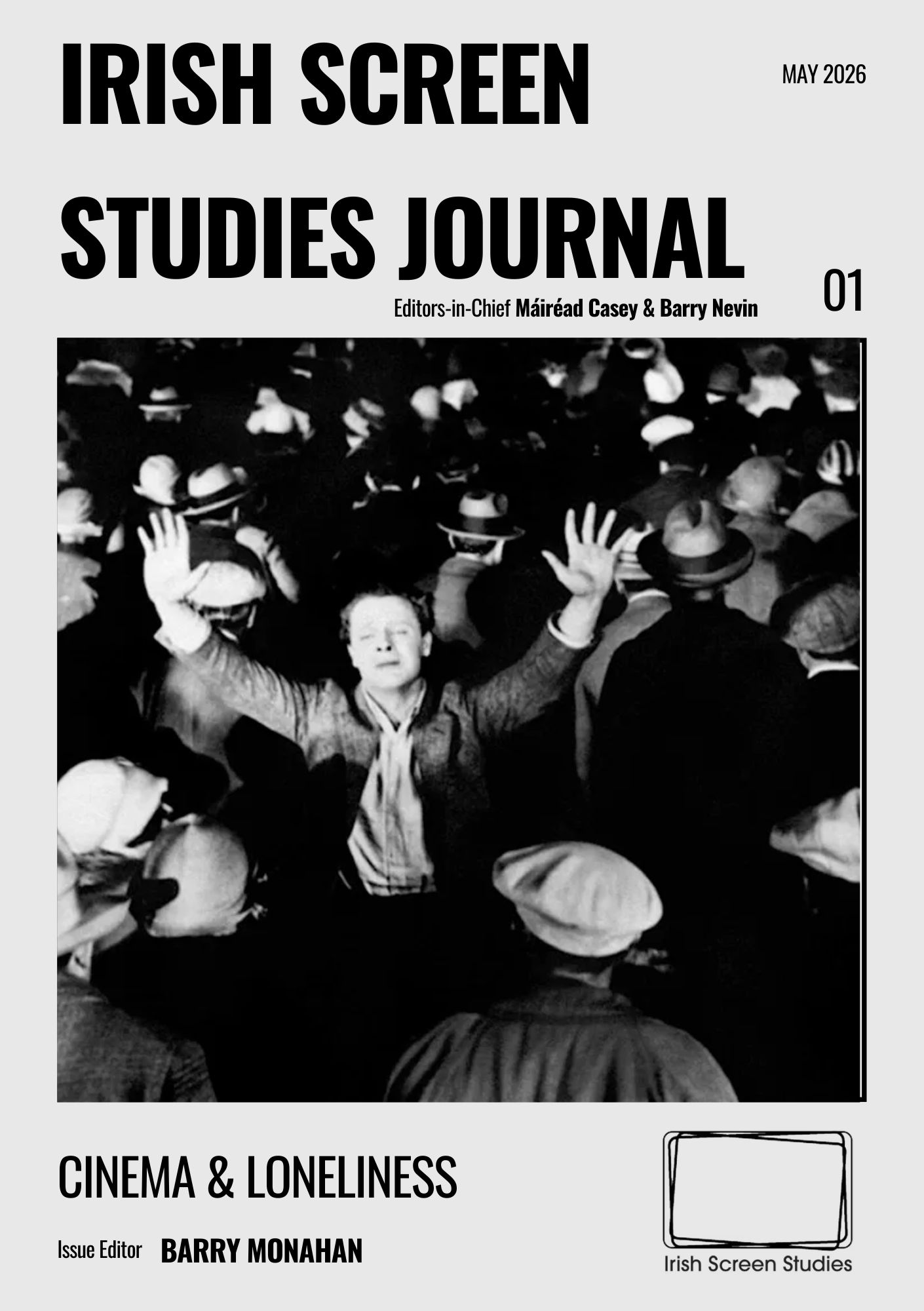
Hannah Arendt and the iPhone
Modern Technology, Cinema, and Loneliness
Keywords:
Hannah Arendt, film spectatorship, social isolation, political detachment, modern technologyAbstract
This article revisits Hannah Arendt’s 1958 book The Human Condition to propose that many of her contemporary concerns about humanity’s relationship with technology were prescient in describing our twenty-first century lives. It considers the cinema as a social place, a cultural form of expression, and an interpersonal experience as a starting point to explore human interactions (or isolations) in our post-postmodern condition. By referencing the work of Arendt, it proposes that how we engage with film and its narratives have changed radically and perhaps irreversibly, and we can learn a great deal about out political selves from these alterations.
References
BIBLIOGRAPHY
Arendt, Hannah. 2017 (1951). The Origins of Totalitarianism. London: Penguin Classics. ---------------. 2018 (1958). The Human Condition. London & Chicago: The University of Chicago Press.
Biskind, Peter. 1999. Easy Riders, Raging Bulls. London & New York: Bloomsbury.
Chambers, Ciara. 2020. “Ethics and the Archive: Access, Appropriation, Exhibition.” In Ethics and Integrity in Visual Research Methods: Advances in Research Ethics and Integrity. Volume 5. Emerald Publishing Limited (online). 133–151.
De Tocqueville, Alexis. 1994. Democracy in America. London: David Campbell Publishers.
Elsaesser, Thomas (ed.). 1990. Early Cinema: Space, Frame, Narrative. London: British Film Institute Publishing.
Hoerl, Kristen. 2018. The Bad Sixties: Hollywood Memories of the Counterculture, Antiwar, and Black Power Movements. Mississippi: University of Mississippi Press.
Gaudreault, André. 1990. “Film, Narrative, Narration: The Cinema of the Lumière Brothers.” In Early Cinema: Space, Frame, Narrative. Thomas
Elsaesser (ed.). London: British Film Institute Publishing. 68–75.
Gunning, Tom. 1990. “The Cinema of Attractions: Early Film, its Spectator and the Avant-Garde.” In Early Cinema: Space, Frame, Narrative. Thomas
Elsaesser (ed.). London: British Film Institute Publishing. 56–62.
Kolker, Philip. 2000. A Cinema of Loneliness. Oxford: Oxford University Press.
Riesman, David. 2020 (1950). The Lonely Crowd. New Haven: Yale University Press.
Stokes, Melvyn. 2007. D.W. Griffith’s the Birth of a Nation: A History of the Most Controversial Motion Picture of All Time. Oxford: Oxford University Press.
Stokes, Melvyn and Paul McEwan (eds). 2023. In the Shadow of The Birth of a Nation: Racism, Reception and Resistance. London: Palgrave Macmillan.
Svendsen, Lars. 2017. A Philosophy of Loneliness. London: Reaktion Books.
FILMOGRAPHY
Amarcord (Federico Fellini, 1973)
Cinema Paradiso (Giuseppe Tornatore, 1988)
Donny Darko (Richard Kelly, 2001)
Fade to Black (Vernon Zimmerman, 1980)
Goodbye, Dragon Inn (Tasi Ming-liang, 2003)
Hannah and Her Sisters (Woody Allen, 1986)
Le Fabuleux destin d’Amélie Poulin (Jean-Pierre Jeunet, 2001)
Taxi Driver (Martin Scorsese, 1976)
The Birth of a Nation (D. W. Griffith, 1915)
The Butcher Boy (Neil Jordan, 1997)
The Last Picture Show (Peter Bogdanovich, 1971)
The Long Day Closes (Terence Davies, 1992)
The Wind the Shakes the Barley (Ken Loach, 2006)
Triumph of the Will (Leni Riefenstahl, 1935)